Dark and funny and close to home: Portable Curiosities by Julie Koh

There’s a moment in ‘Civility Place’, the fourth short story in Julie Koh’s Portable Curiosities, that I had to put the book down and laugh until I burped. In ‘Civility Place’, the young corporate lawyer works in a building with the fastest glass lifts in the country, where fresh flowers decorate the foyer every morning, and the law firm has a multimillion dollar art collection rotating on its walls. I know that law firm, or at least, I’m pretty sure I know its real life equivalent, just as I’m sure I know the ice-cream store in ‘The Cream Reaper’, and weddings with UN-variety guest lists in ‘Slow Death in Cat Cafe’.

I definitely know the flame-haired woman in ‘The Three-Dimensional Yellow Man’.
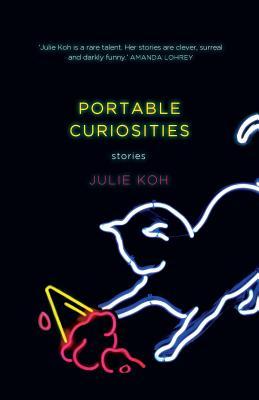
28428343Portable Curiosities (2016) is written by Julie Koh, a Chinese-Malaysian Sydneysider and former corporate lawyer, a bio which the moment I read I knew meant I was  in for a treat. It’s not that one has to be Asian-Australian or know corporate Sydney to enjoy this little jewelry box of very clever stories, but being familiar with both of those worlds there were times I found myself inserted into her stories, wholly and completely, until I wondered why I wasn’t sitting and spinning in a starfish-footed desk chair as I laughed.

And there’s so much to laugh or cry at. There’s a pair of Fantastic Breasts (capital F, capital B) on legs that can save the world but not themselves, in a tale of objectification taken to extremes. ‘Sight’ has a family living with ghostly lizard boy after a miscarriage. An orchestra fights a guerilla war in forest like something out of Monty Python. ‘The Fat Girl in History’ calculates paunch to penis ratios on a Sydney gay nudist beach that I’ve never visited but now feel I have. And I particularly commend ‘The Three-Dimensional Yellow Man’, where a two-dimensional yellow character literally climbs out of a film-screen into a real world that can only deal with stereotypes, and in which Julie captures so much of my own feelings towards Asian racism and representation in Australia.

All of these and more are told in sharp, clean prose where no word is wasted making for stories that, despite their shortness, contain a hell of a punch. Like all the best satire Julie’s punches are aimed at consumerism, racism, sexism, self-image or just the absurdity of modern society, and well worth your time. And now I can never eat another Gelato Messina ice-cream without wondering if it’s going to kill me.

Portable Curiosities is published by University of Queensland Press.
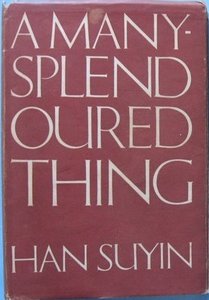
Mother as God: Chimera by Gu Shi

Amidst all the headache-inducing headlines about walls and taxes, a bit of science today: First human-pig ‘chimera’ created in milestone study.

Scientists have created a human-pig hybrid in a milestone study that raises the prospect of being able to grow human organs inside animals for use in transplants.

It marks the first time that embryos combining two large, distantly-related species have been produced. The creation of this so-called chimera – named after the cross-species beast of Greek mythology – has been hailed as a significant first step towards generating human hearts, livers and kidneys from scratch.

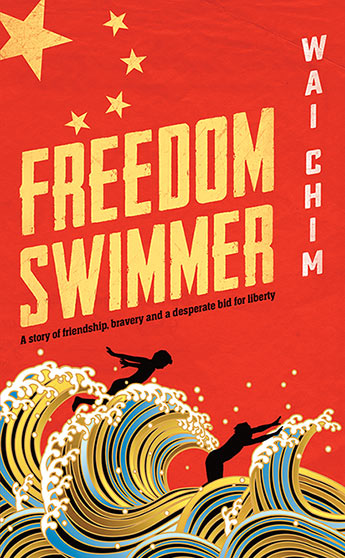
Relief aside of seeing scientific advancements in the news in a time when clowns are trying shut down scientific discussion, the article immediately reminded me of a novella I read earlier this week, Chimera by Gu Shi, originally published in Chinese in October 2015, and translated by S.Qiouyi and Ken Liu in March 2016.

Chimera is all about the question and ethics of human-animal hybrids, told first through the perspective of musician Evan Lee, and later his son, Tony. The key figure throughout is Evan’s ex-wife and Tony’s mother, a brilliant scientist who is never actually named but is variously described as calculating, a monster, or a child. There’s a parallel story of a murder on a space-ship whose passengers buy immortality, and woven through all, the image of a pig who has Tony’s eyes.

I really enjoyed this one. The English translation is efficient prose, and while the initial descriptions of mother-as-monster are heavy-handed, it falls away once the plot was established. There’s a particularly wrenching scene where the mother’s self-control cracks enough for her to confess that being pregnant is akin to hosting to a parasite, and later there are other hints at true feeling (or maybe they too are an act). The question of how much this woman cares for her family and creations is just as interesting as the whodunnit on Eden, the organ-farm spaceship, and both plots are enough to overlook the story’s weaker points—a red-herring presentation scene about the evolution of humankind, the increasingly pretentious quotes that begin each part—and follow the various threads through the ethical dilemmas to where everything eventually joins.

Back to today’s news: ‘[R]apid progress in chimera research had prompted a range of troubling questions, including whether the progeny would look more human or more pig, what would happen if a chimera had a human thought and whether it was possible for the human cells to cannibalise the pig embryo, resulting in a mostly-human, slightly-pig offspring. “These more fantastical possibilities are not a problem in reality.”’ For the time being, while the possibilities around chimeras are still just on the side of fantastic, Chimera is an engaging read (or listen) that I’ve found lingering in my head long after finishing.

Chimera was published in English in Clarkesworld Magazine March 2016, and can be read and/or listened to here.

Getting into silkpunk – The Snow Of Jinyang

One of the best podcasts I’ve started tuning into is Clarkesworld Magazine, the Hugo-award winning sci-fi/fantasy magazine. Their back issues have turning my car into spaceships during work commutes, and best of all, they go out of their way to source and translate fiction from around the world, including a lot of Asian and Chinese sci-fi/fantasy short fiction.

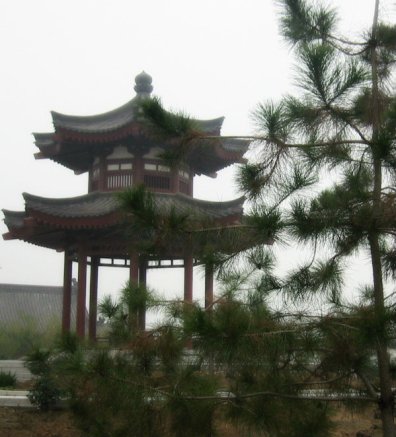
Winter gazebo, China 2001
Winter gazebo, China. Copyright JZ Ting 2001

The Snow Of Jinyang is a novella by Zhang Ran, set in 10th century China during the Ten Kingdoms period, where the Han city of Jinyang is under siege from the Song Emperor days before its well-documented destruction. Alternate history is signaled in the first line: the city has an internet. There are also self-driving carriages, Ray-Bans, and lightsabre torches. There’s also a conspiracy – or several conspiracies – to try and save or salvage the city, all of which end up revolving around internet-addicted scholar Zhu Dagun and Prince Lu, a genius whose East City Institute is the source of the internet and Ray-Bans, but no one actually. What unfolds in is a hilarious Wizard of Oz meets A Connecticut Yankee In King Arthur’s Court wrapped up in Chinese historical silk-punk.

I had a great fun with this one. There are enough time-travel fantasy (chuanyue) stories in Chinese pop culture where the protagonist prevails by the power of his/her 21st century knowledge but has to navigate ancient Chinese society, and with this one my imagination started envisioning the story as a Chinese TV wuxia-styled comedy complete with English subtitles. I’m sure there are plenty of Chinese puns and wordplay in the original, but the English translation by Ken Liu and Carmen Yilang Yan is fluid and fun all on its own, capturing a difference in speech between the men of 10th century China and Prince Lu’s modern dialogue. (‘Prince’ Lu became ten times more hilarious when it’s revealed his real name is Wang Lu, which I expect is 王/wáng, meaning king/ruler/prince, but also a very common Chinese name). I loved the descriptions of a silk-punk internet (technically a city intranet, complete with government monitoring), the banter about the ridiculousness of Taoist alchemy, and the potpourri of references from Zhuge Liang to Star Trek and Macross (probably three of the biggest touchstones among my geeky immigrant Asian friends group). It’s all entertaining in a way that I suspect is a deliberate send-up of chuanyue tropes, which in the end are subverted as, despite all fantastical efforts, history marches on. As someone trying to find the time and headspace to properly dive into Ken Liu’s Grace of Kings, finding this novella was a welcome introduction to Chinese spec-fic and silkpunk which I’d love to read more of.

The Snow of Jinyang can be read and listened to online at the Clarkesworld website here.

The stories inside a hyphen

Whenever I’m asked where I’m from, there’s the short answer and the long answer. In some parts of the world, the short answer I’m Australian is enough and the conversation can quickly move on to more interesting, less introductory small talk topics. In other parts of the world, the short answer is just the prologue to an explanatory story I’ve given countless times in three languages.

In Europe, there are two signals to start the story: either it’s but you don’t look Australian, or it’s but where are you really from? Both drive home yet again that whatever the international image of an Australian is (presumably blonde, suntanned, rather like a Hemsworth brother or Cate Blanchett), I definitely don’t match up, and at least five minutes of the introductory small talk I’ve fallen into is going to be explaining that over 12% of Australia’s population is of Asian descent, how my family and I became part of this 12+%, and by what it means to be an Asian-Australian. It’s an exhausting story to tell sometimes, particularly if I do it in French, but at least in Europe there was always plenty of good wine at hand to be fortified with.

The story comes from a different angle in mainland China. The opening line was always either someone wondering if I was Korean or Japanese which made me wince, or with the remark, Australian? But you are Chinese! which prompts a weird mix of pride and discomfort. Whatever the opening, it kicks off an attempt to explain that last century my ancestors fled southern China for Malaysia where they built a life my parents would eventually leave for Australia, and about the greater diaspora which is Chinese but not Chinese. It’s a more complicated story than the one I use in Europe, and far more difficult to tell given the limits of my Mandarin, and I never know how well I tell it. Thankfully we can always bond over Chinese food!

I don’t tell the story in Australia. In this country where I’ve grown up, whose passport I carry and where I call home, the short answer is enough, or should be, and most of the time it is. Yet in the past few years the short answer has become inadequate, too short, too simplistic, and in need expanded. Thankfully nowadays when I look around, there are plenty of other hyphenated Asians, from Australia and South East Asia to Canada, the U.S. and Europe, all writing and telling similar stories on their terms, giving my and others new mirrors to hold up to our experiences and imaginations. This is my space to record them.

JZT